
Transparency Protocol: This transmission may contain affiliate links. If you acquire assets through these channels, the Codex receives a small commission at no extra cost to you. This fuels our operations.
Glitch in the Matrix or Trick of the Mind?
"Luke, I am your father."
If you can hear James Earl Jones's deep voice saying those exact words in your head, I have bad news for you: He never said that. The actual line in The Empire Strikes Back is: "No, I am your father."
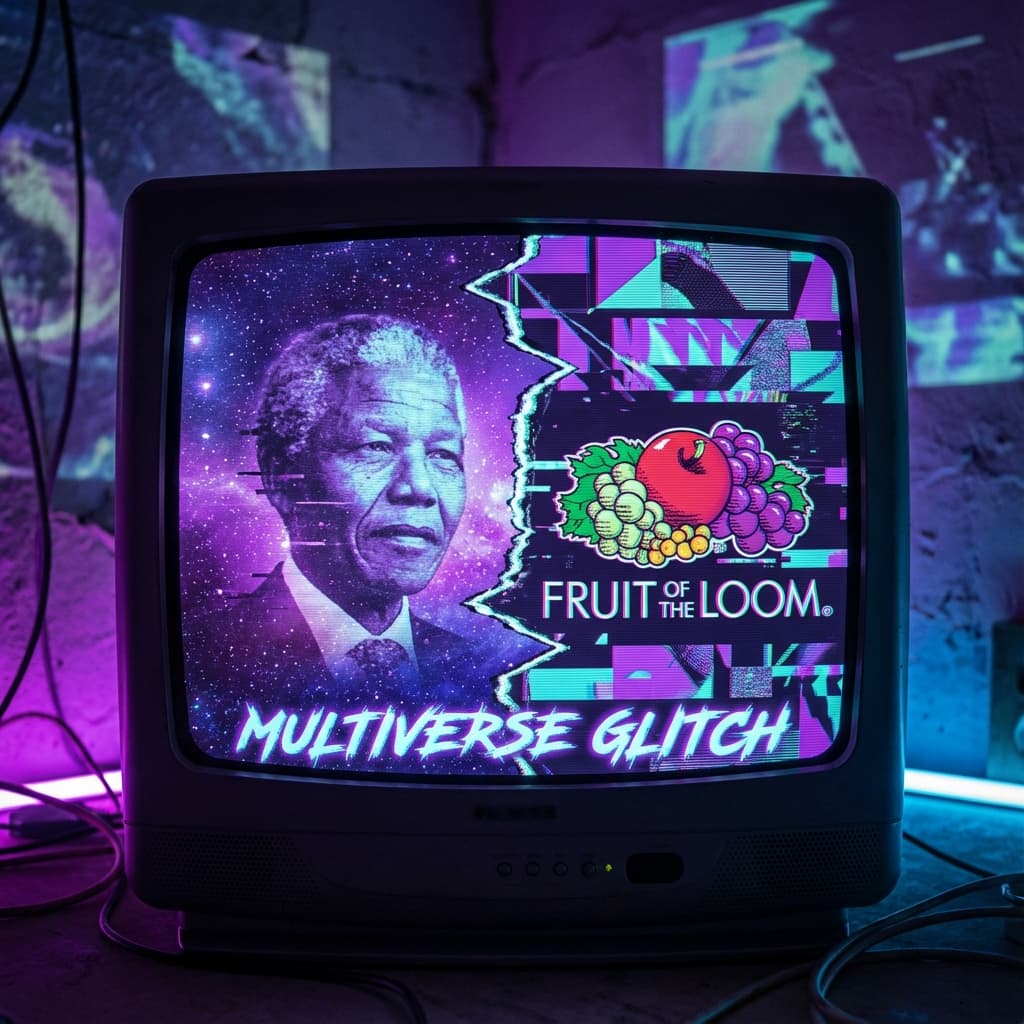
This is the Mandela Effect—a phenomenon where large groups of people share a specific, vivid memory that contradicts historical record. It was named by paranormal researcher Fiona Broome, who discovered that she—along with thousands of others—distinctly remembered anti-apartheid leader Nelson Mandela dying in prison in the 1980s. (In this timeline, he died a free man in 2013).
[!WARNING] Proceed with caution. The following examples may cause existential dread.
The Theory: Sliding Realities
While psychologists attribute this to confabulation (the brain filling in memory gaps) or social contagion, a more radical theory suggests we are experiencing Quantum Immortality or sliding between parallel universes.
Did the Large Hadron Collider (LHC) at CERN shift our reality when it fired up in 2012? Did we merge with a neighboring timeline?
The Top Mandela Effects That Will Break Your Brain
1. The Cornucopia That Never Was
Millions of people swear the Fruit of the Loom logo featured a cornucopia (horn of plenty) behind the fruit. People remember learning the word "cornucopia" from the logo. Reality: The logo has always been just fruit. The company confirms the cornucopia never existed.
2. Pikachu's Tail
Ask a Pokémon fan to draw Pikachu from memory. Many will draw a black tip on the end of his tail. Reality: Pikachu's tail is solid yellow (with a brown base). There is no black tip.
3. The Monopoly Man's Monocle
Does Rich Uncle Pennybags wear a monocle? He looks like the type, right? Reality: He has never worn a monocle. You might be confusing him with Mr. Peanut (who does wear one).
4. "We Are the Champions"
Sing the Queen song in your head. How does it end? "No time for losers, 'cause we are the champions... of the world!" Reality: The original studio recording just ends with "…cause we are the champions." The "of the world" line is missing. (Though Freddie Mercury often added it in live performances, fueling the confusion).
5. Shazaam / Kazaam
Many 90s kids remember a movie called Shazaam staring the comedian Sinbad as a genie. Reality: It doesn't exist. There was a movie called Kazaam starring Shaq. But Sinbad? He never played a genie.
Conclusion
Is our memory flawed? Almost certainly. But the specificity of these shared false memories is haunting. Why do we all misremember the cornucopia? Why do we all add the monocle?
Perhaps we are just distinct travelers from a timeline that no longer exists, stranded here in a world where Pikachu's tail is yellow and Nelson Mandela lived to be president.


